
Understanding the sweet bonanza slot is easier when its screen is read in the right order. The game does not use traditional fixed paylines, and a single paid spin can continue through several tumbles. This guide explains the Sweet Bonanza game rules in practical terms, including how wins are counted, what the symbols do, how Free Spins operate and which settings may differ between Canadian-facing casino operators. The in-game information panel remains the final reference for the particular version loaded on your device.
Start with the grid, not the paylines
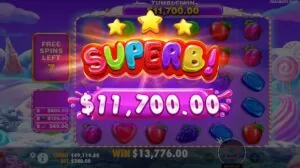
The original game uses a 6×5 grid, giving it 30 visible symbol positions. Instead of checking a line from left to right, the game counts matching paying symbols anywhere on the grid. A qualifying combination begins with eight identical symbols. Larger groups receive higher awards, with the published categories covering eight or nine, 10 or 11, and 12 or more matching symbols.
This means position is less important than quantity. Matching fruit or candy symbols do not need to sit beside one another in a conventional line. When enough of the same paying symbol appears across the grid, the combination qualifies. The value of the win depends on the symbol and the number collected, so the paytable should be checked rather than judged by the visual size of the sweets.
Several wins can occur during the same paid spin. After the first result is assessed, the value of qualifying combinations is added before the board changes. The practical lesson is to watch the total symbol count and the win summary, not just the most prominent symbol. A crowded screen can contain more than one winning group, while a visually attractive arrangement may still fail to reach eight matching symbols.
What happens after a winning combination?
The central mechanic is the Tumble feature. Once a winning group has been paid, those symbols disappear from the grid. The symbols that remain fall into the empty spaces, and new symbols enter from above. The replacement symbols can create another qualifying combination without requiring a separate paid spin.

Each new combination is evaluated in the same way as the first: matching symbols are counted anywhere on the 6×5 grid. If another win forms, the process repeats. Tumbles continue until the latest arrangement produces no new qualifying combination. The full chain belongs to the original spin, so it is useful to distinguish the initial stake from later results generated by the same sequence.

Reading the round in stages helps avoid a common misunderstanding. A second or third tumble is not automatically a Free Spins round, and a new group appearing after symbols fall does not represent a second stake. It is part of the same active result. The game’s history function, when available in the loaded version, can help review the sequence and show how separate tumble wins contributed to the final amount.
Which symbols trigger the bonus features?
The pink-and-white lollipop is the Scatter symbol. It can land anywhere on the grid rather than needing to appear in a particular position. Four or more Scatters trigger the built-in Free Spins feature. The game also awards a direct Scatter payout for four, five or six Scatters before the bonus round begins, according to the documented original rules.
The feature normally starts with 10 free spins. Three or more additional Scatters during the feature award five extra free spins. These are game rules, not promotional free spins supplied by a casino. A promotion may advertise free rounds separately, but its expiry date, wagering conditions and other restrictions come from the operator’s terms rather than from the slot’s internal paytable.
Multiplier bombs appear during Free Spins in the original version. Each bomb carries a random value from 2x to 100x and remains on the grid until the current tumble sequence ends. The values collected in that sequence are added together, and the resulting multiplier is applied to the tumble win. It is therefore the combined value at the end of the sequence that matters, not necessarily one bomb viewed in isolation.
Which settings can change from one operator to another?
The rules of the core game are generally consistent, but the version offered by a casino can use different settings. The applicable RTP, stake range, currency denomination and available features should be read from the information screen inside the loaded game. Published RTP figures for the original release have been around 96.48% to 96.51%, but that range should not be treated as a universal value for every Canadian-facing operator.
Optional features are also not guaranteed. An Ante Bet or Double Chance-style setting may increase the base stake by 25% and add more Scatter symbols, described in the source material as doubling the chance of triggering Free Spins naturally. When enabled, this option disables the Free Spins purchase feature. The exact availability can depend on the operator and the jurisdiction in which the game is offered.
Bonus Buy, where permitted, can purchase the 10-spin round for 100 times the selected base bet. That price is a game setting, not a deposit bonus, and the option may be unavailable. The published maximum-win figure is around 21,000 times the stake, although displayed figures can vary between configurations. Before relying on any number, open the paytable and confirm the active version.
How should you read the game screen before spinning?
Begin with the information button and identify the loaded game configuration. Check the qualifying symbol counts, Scatter requirements, Free Spins rules, multiplier treatment, RTP and any listed maximum win. This is more reliable than assuming that every website presents identical settings. It also prevents confusion between the original title and later releases with similar candy-themed names.
Next, review the stake control and note whether an optional Ante Bet, Bonus Buy or autoplay function is active. Autoplay settings can include stop conditions based on a win, a feature trigger or a selected balance change. These tools change how the session runs, but they do not alter the underlying requirement for a winning combination. Quick Spin, sound and animation controls are presentation settings rather than payout rules.
Finally, separate game information from account information. The slot controls spins, symbols, tumbles and its own game history, while the casino controls the account balance, verification, cashier, provincial availability and account-level limits. If a rule about deposits, withdrawals, promotional play or access is not shown in the game panel, check the operator’s stated requirements instead. The same distinction applies on mobile, where the game can scale to a browser without creating a separate game account.
Questions readers often ask
Do symbols need to touch each other to win?
No. The game uses a Pay Anywhere system, so qualifying symbols are counted across the 6×5 grid rather than along fixed lines. The key requirement is reaching the required number of identical paying symbols. Their exact positions and whether they form a conventional connected pattern do not determine the win.
Does every tumble cost another stake?
No. Tumbles created by a winning combination belong to the same paid spin. Winning symbols disappear, replacements fall into place and further wins may follow without another stake being charged. The sequence ends when the latest grid produces no qualifying combination, after which the next spin is a separate paid round.
Are promotional free spins the same as the built-in bonus?
No. The built-in feature is triggered by four or more Scatter symbols and normally begins with 10 free spins. Promotional free spins are supplied under a casino’s offer terms. Their wagering requirements, expiry conditions, maximum bets and contribution rules can differ, so the promotion’s terms must be checked separately.